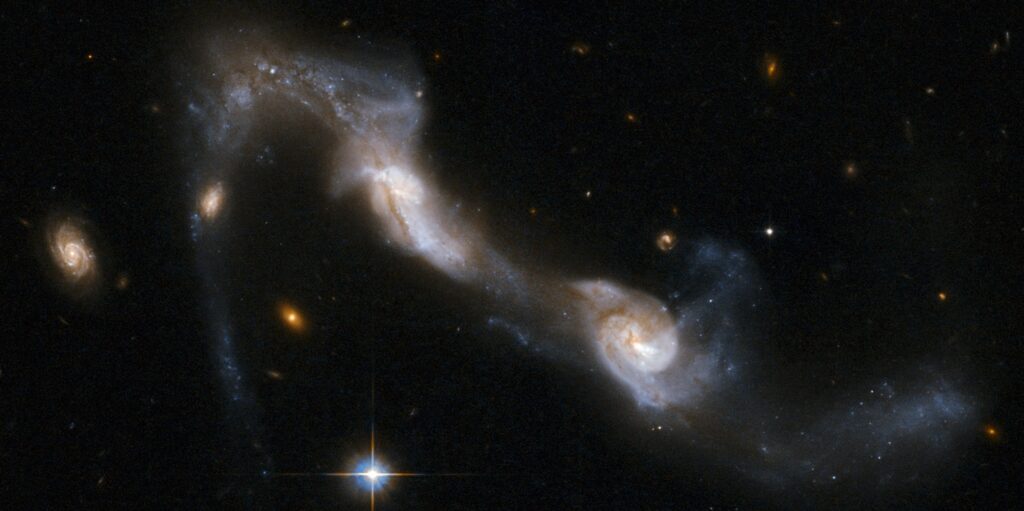
The XTREME project performed a systematic multi-wavelength spectroscopic study of the physical properties of the extended regions of nearby luminous infrared galaxies (LIRGs), combining the power of some of the largest ground- and space-based telescopes, past and present: Spitzer, Herschel, Hubble and ALMA. These observatories provided a broad coverage of the electromagnetic spectrum, from the ultraviolet/optical to the sub-millimeter, bringing into the table a large number of observables with which we can truly investigate the multi-phase nature of the interstellar medium (ISM). A coherent picture of how the ionized, neutral and molecular gas phases in the extended regions of LIRGs are affected by the nuclear activity are only possible with a comprehensive, dedicated project that makes use of all the multi-wavelength information at hand, and takes advantage of the synergistic nature of the greatest observatories.
The XTREME project successfully addressed the following fundamental questions: Is the extended ISM in any way similar to that of the central core? Or does the nuclear activity affect its surroundings at large distances, beyond kpc scales? And if so, how and to what degree? Does the density or ionization state of the gas depend on the stage of interaction in merger systems? And if so, is each gas phase affected equally? Are the properties of the extended star formation, such as the SF rate itself, the SF efficiency, the specific SF rate, or the gas depletion time-scales changing as a function of distance to the LIRG nuclei?
A database with all the publicly available measurements and statistics is hosted at the IA-FORTH and can be found at this website.